The Devil Wears Prada 2 (55)
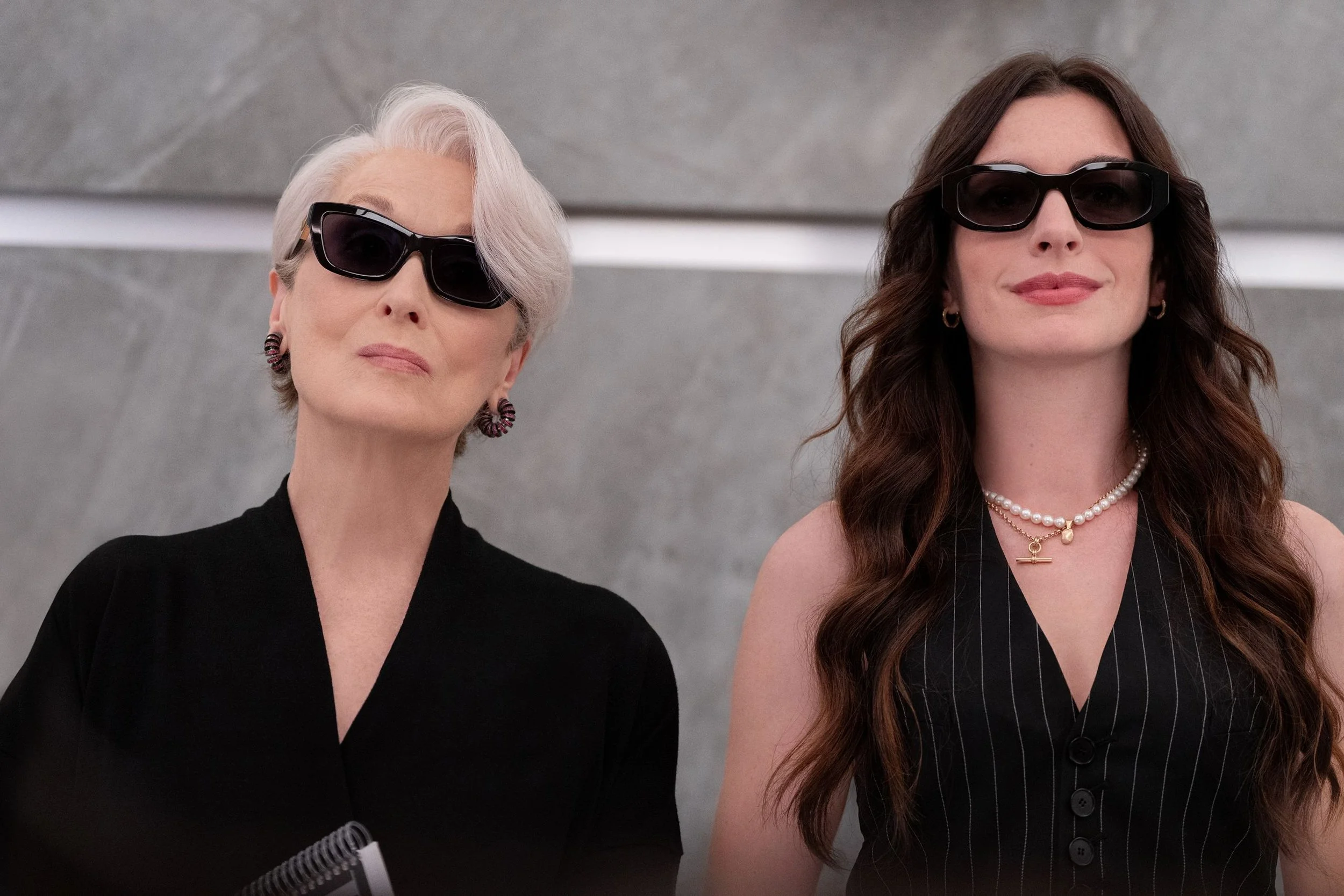
Imagine! In the year 2026, there exists a media outlet more interested in serious journalism than succumbing to tech’s business plans and “streamlining” All that before becoming extinct with mathematical precision.
Twenty years later, PRADA still has something to do with real life; it was the toxic workplace ideation in the aughts that felt real and relevant. Stockholm is calling! They want their syndrome back! As much as the first - now classic - film managed to place Andy (Anne Hathaway) in an ethical conundrum between her personal and professional life while at the same time remaining a Fantasy Land, the newest iteration also has to deal with the Nostalgia Factor all these sequels and returns faithfully depend on.
Here, we start with Andy about to receive an award for her inveistigative journalism in a small but respectful publication. She still lives in a one-bedroom hole in New York and drinks her cynicism away in beers with her peer colleagues. All of us having worked in the corporate world and becoming accustomed to the ways corporation sucks the life out of you can certainly relate to the level of cynicism at play; especially in this economy. PRADA - i think - succeeds in the self-reflexivity of acknowledging the narrative strategies it has to emply as a sequel to a text that was mostly misinterpreted, or better put, read against a context that was imbalanced: culture vs the private. A lot of the focus was put onto the cultural elements making those characters, and mostly the main one, Andy, interesting or relevant. In that sense, having Andy representing a muchly expressed need of the middle-age professional to abide by their ethics only to turn this on our head for her to pick up a job under the lens of Gig Culture is certainly both faithful to metatext of the original film and… expected.
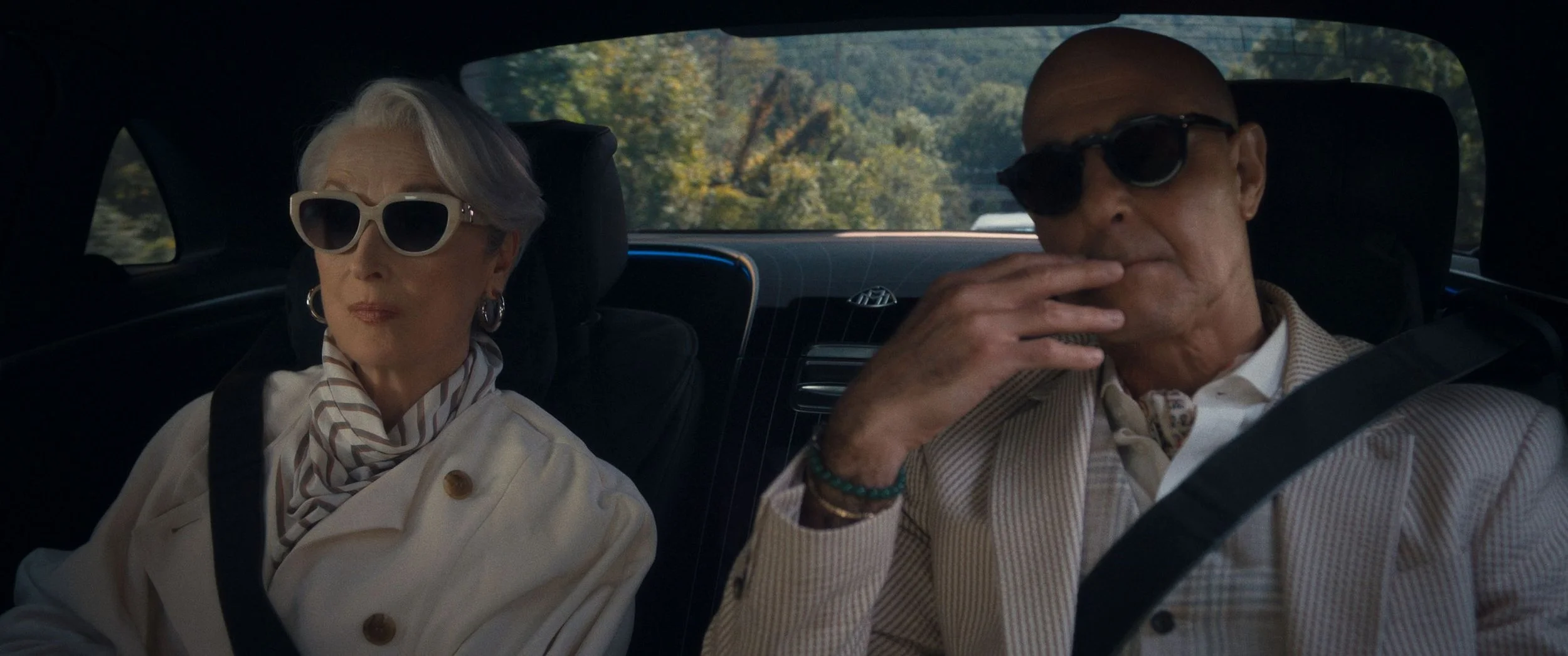
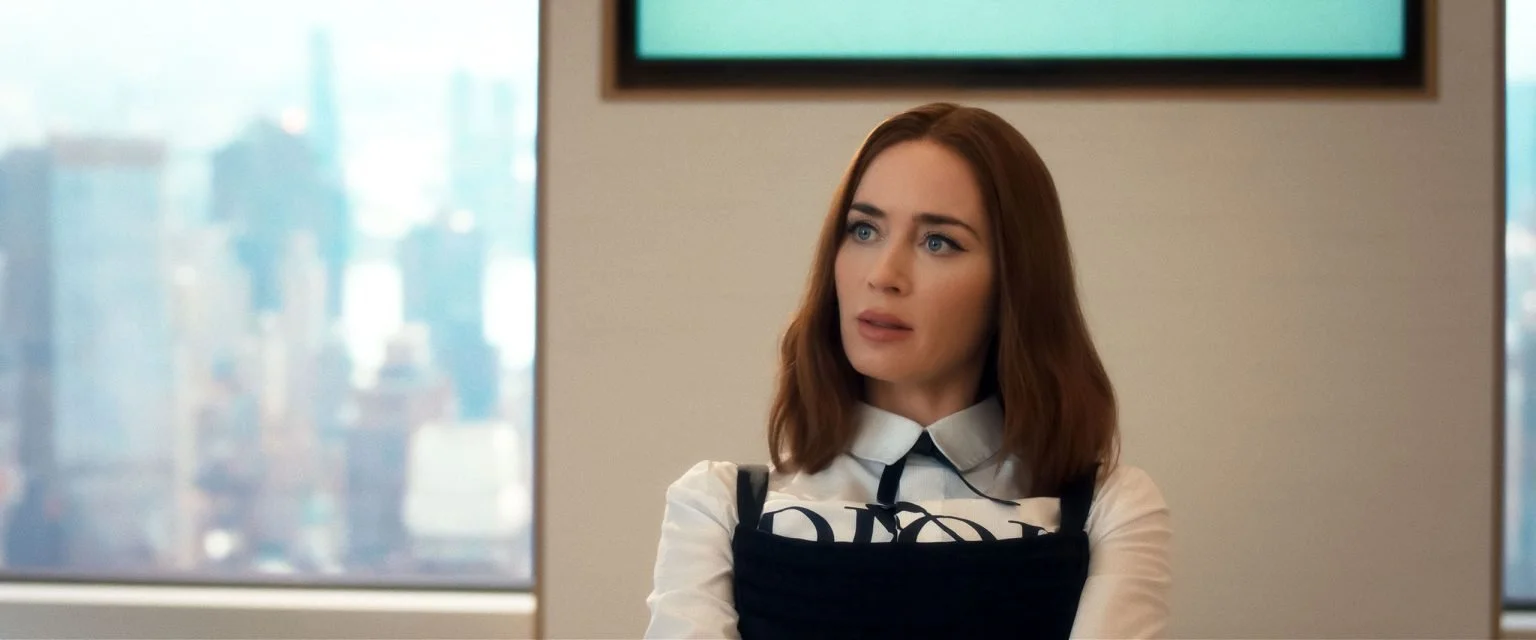
PRADA 2, though, didn’t only have to deal with culture. The film had to also figure out a way to substantially develop those character figures who are now attached to mega-stardom. Streep’s Miranda, Tucci’s Nigel and Blunt’s Emily had to be portrayed in such a way that both fullfils audience expectations and narrative progression. It is to my mediocre satisfaction that this is successful, albeit in a half-assed way. We do certainly believe the developmend and paths those characters followed; Miranda, absolutely devoured and consumed by the duality of fading old-school careerism and La Moda convictions. Nigel, a hard-worker and a faithful partner filled with stoicism and cynical sentiments towards the industry. And lastly, Emily, the quirky and shallow antagonist whose heart seems to have to follow the right way.
Nobody expected this to either completely bomb or reinvent the cinematic wheel; we did though have a curiosity as to whether the film would solely depend on nostalgia factors or be able to express something relevant in our complex and bleak world. I do firmly believe that the (fantastic) acting puts a shadow on some of the less flattering areas of the text; character development lacks sharpness and intuition. Lake Como’s adventure depends on cliches. Peripheral characters can only be characterised as meta-caricatures. Do we though feel PRADA 2 makes justice to PRADA 1? And more importantly, sheds some light to today’s mechanisms in an entertaining way? I am happy to report that yes, we do.
Arguably, this is though not enough. How can we be satisfied or even feel content when the film proposes another billionaire saving the day from a Trump-like figure? One that we can underestimate, or reject as an imbecile, but never get away from? Lucy Liu’s character - the one who ultimately buys Runway, is only defined by her gender and words. Words can say things, and in the case of PRADA 2, her words are filled with… thin air. Insofar we accept that her presence only works as a narrative tool and not a meta-critique of a certain bleakness in the business world, PRADA’s 2 proposition feels cheesy, cheap and wrong. What would you expect - of course - when the film’s main ambition is to focus on the central characters’ fates?
It would be more beneficial for a film like this, popular and highly successful in the box-office, to find the strength to highlight the ephemerality of character and subjectivity in the wake of a literal financial recession. I mean, the original film did somehow foreshadow some of the later events in 2008. Could we say that PRADA 2 - once again - finds its way of appearing in an era of potential catastrophe? I guess we’d have to wait for the next iteration to find out.